ARTWORK
Cartographies de l’Invisible #11
2025
125 × 200 × 200 cm
Hand weaving · natural fibres · natural dyes
Unique work
about the artwork
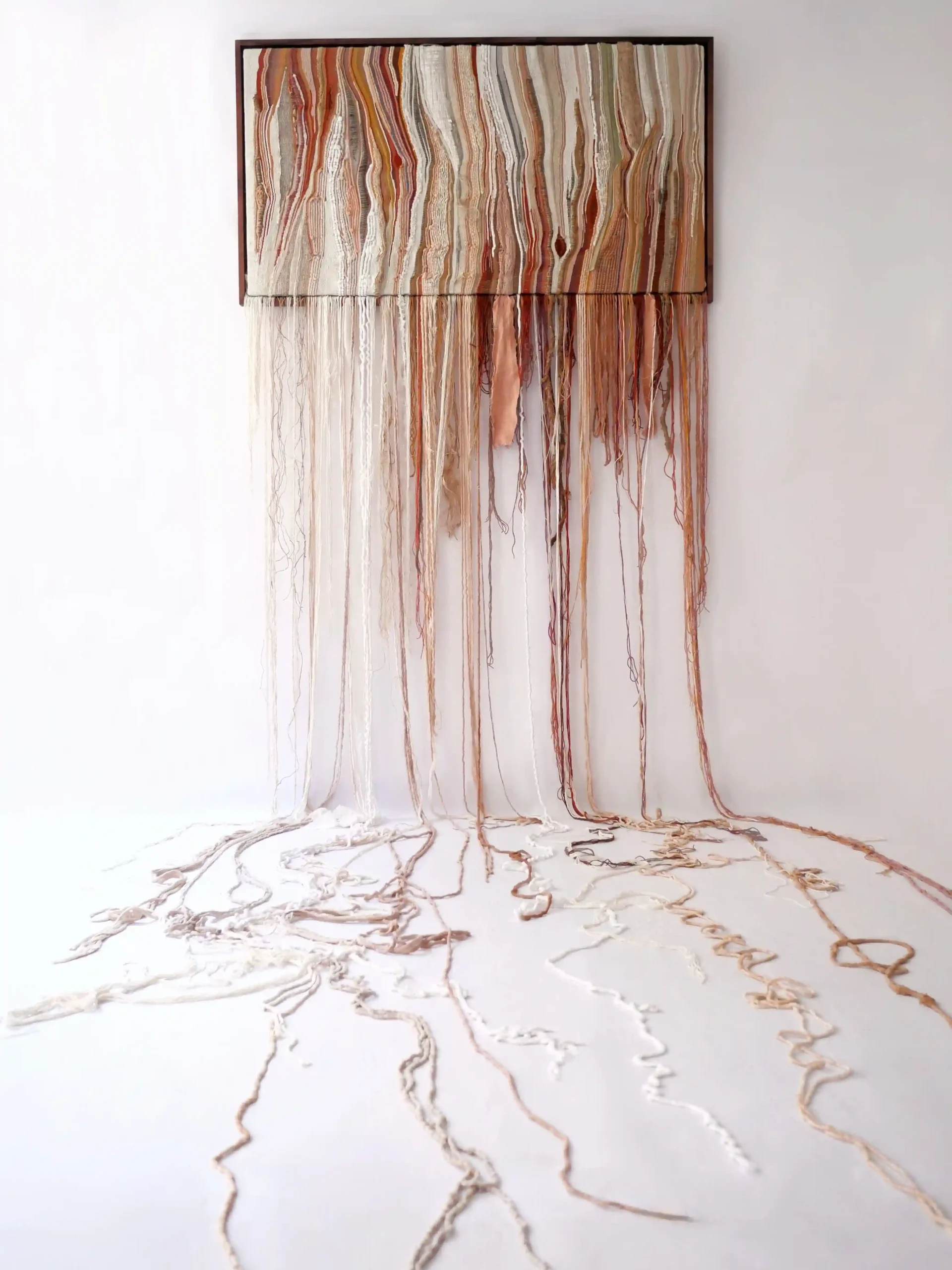
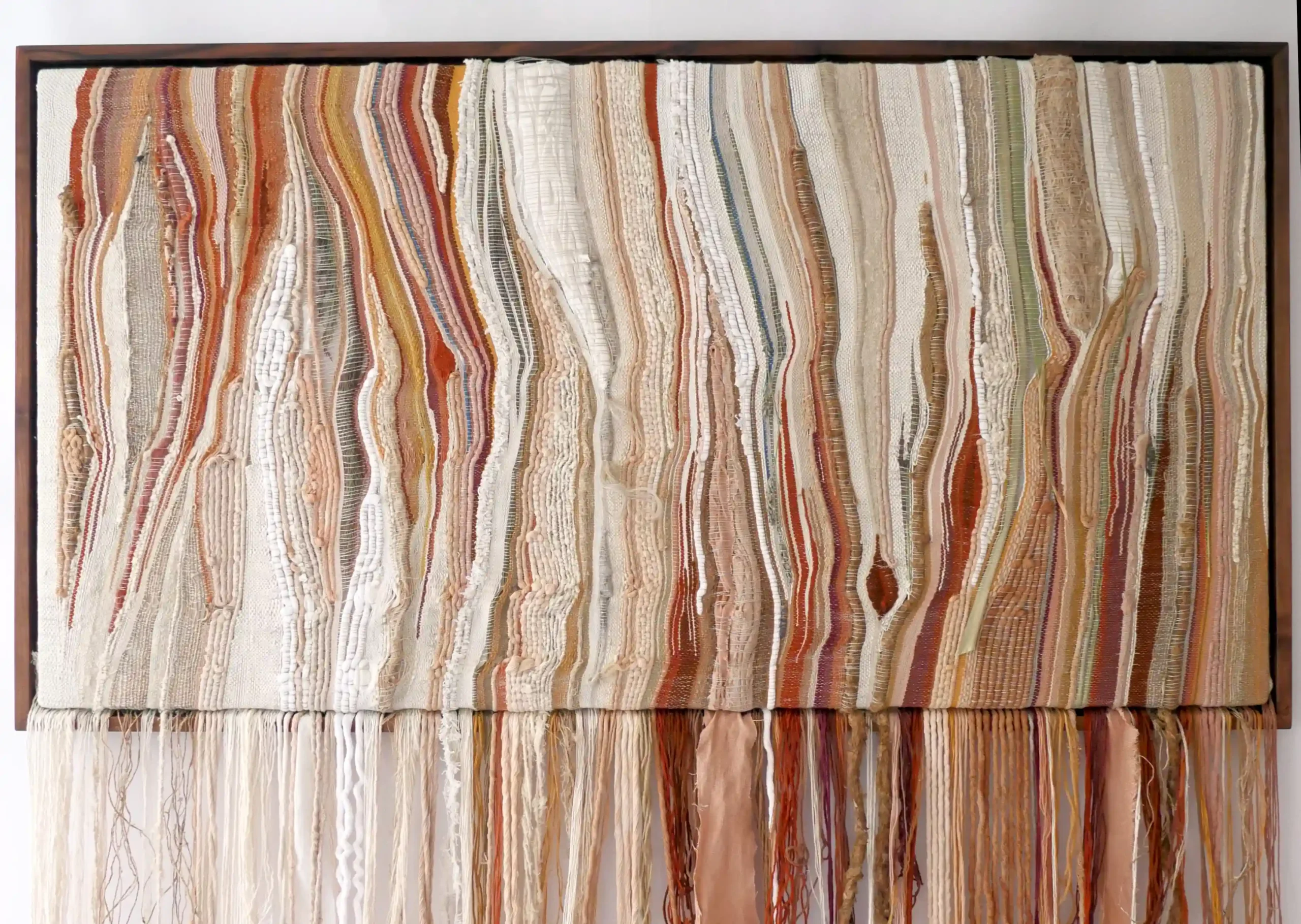
In Cartographies de l’Invisible #11, a woven surface is held within a frame, while some of the threads that compose it continue their movement beyond this boundary.
The threads descend from the surface, reach the floor and spread across it. The work can therefore no longer be apprehended solely as a wall-based image: part of its material enters directly into the space it shares with the viewer.
The frame does not disappear. It continues to give the surface form, tension and scale. But it no longer constitutes its final boundary. The continuity between the work, the surrounding space and the floor is materially produced by the threads themselves.
The work thus engages with a question that has become central to my practice: how can a boundary give form without becoming a closure? Here, the surface remains distinct while allowing what composes it to continue its trajectory beyond it.
MATERIALS & TECHNIQUES
what the work is made of
FIBRES
Cottons
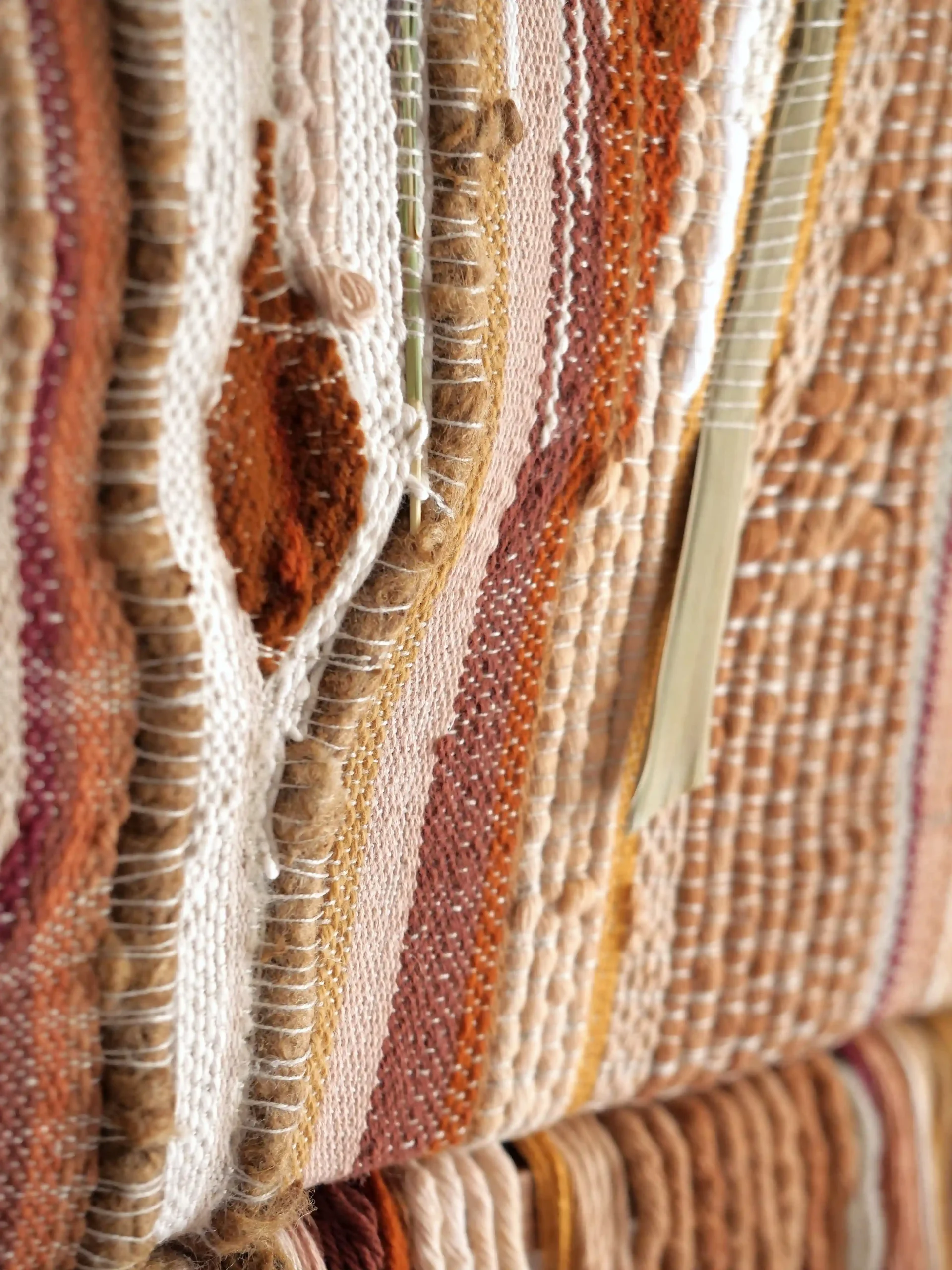
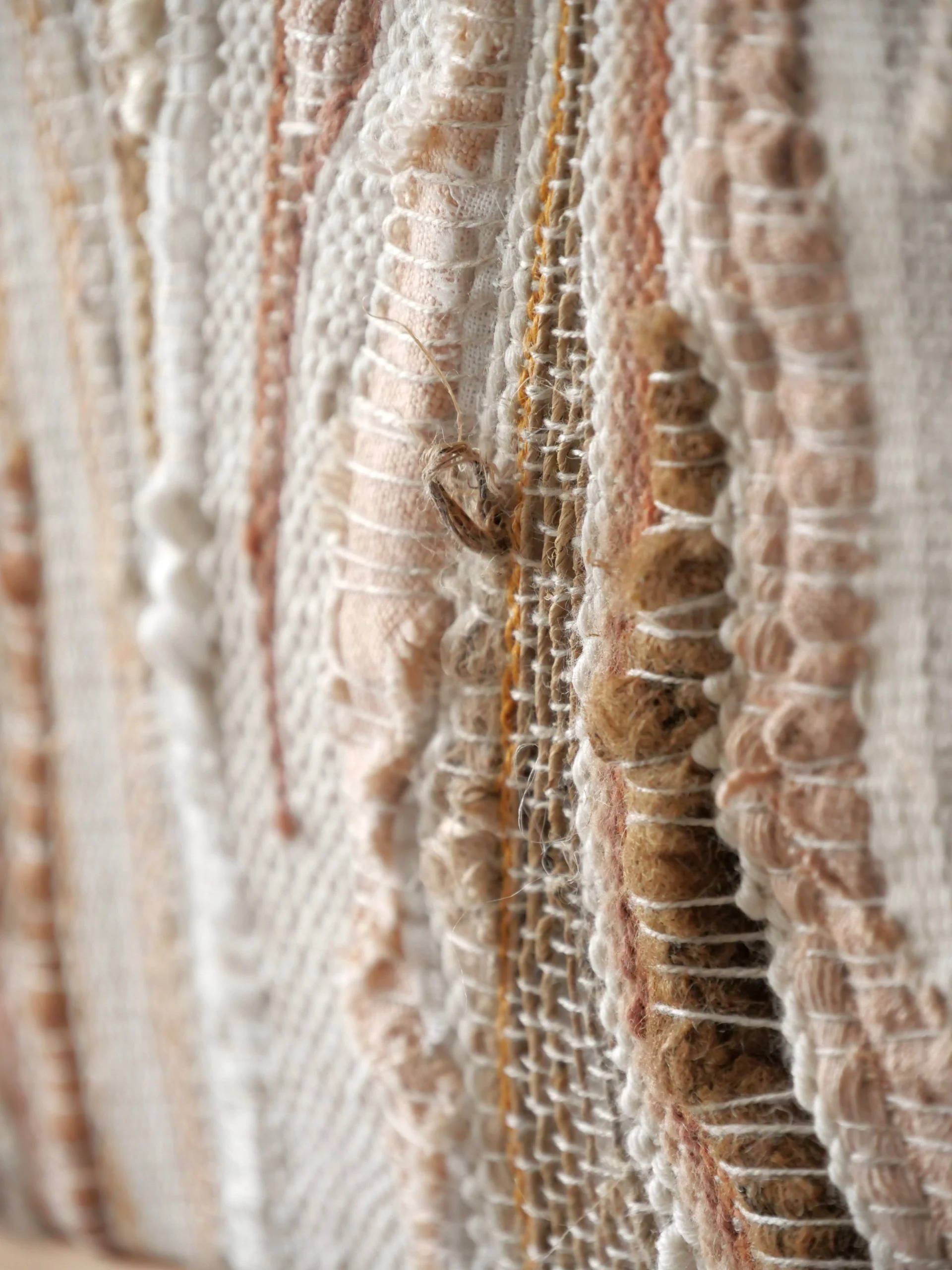
Falé — Sine Saloum, Senegal; grown without irrigation and hand-spun · Cotton grown in Asia and spun in France by one of the country’s last remaining spinning mills, EPV-certified · Pakucho — Peru; native naturally coloured variety, undyed · Recycled cotton — Poland; processed without water or chemicals
Flax
Raw flax fibres · Unbleached linen yarn · Linen fabric — grown and processed in France
Other plant fibres
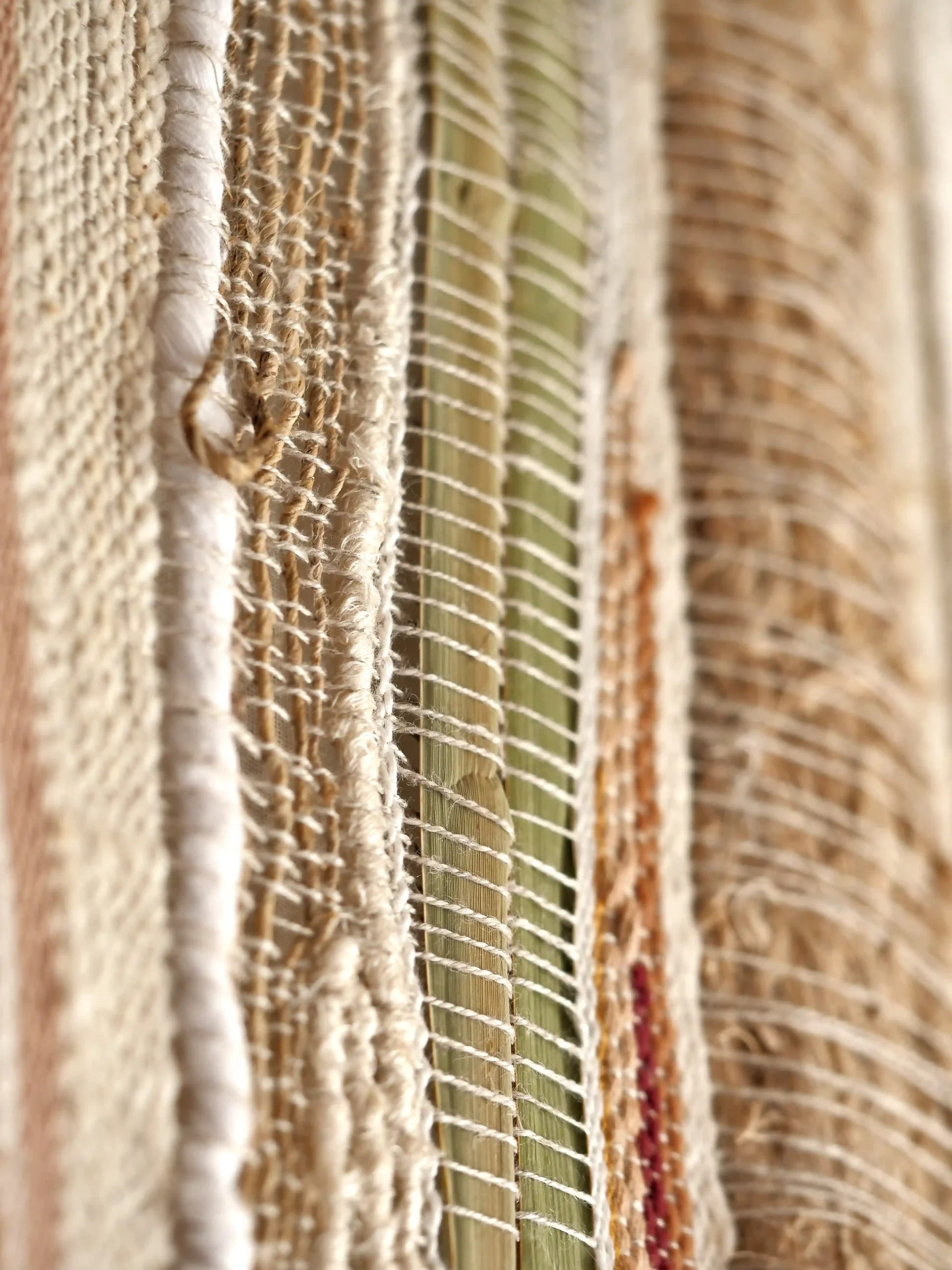
Raw wild hemp, gathered and hand-spun · Raw wild hemp, hand-gathered · Pure bamboo fibre, non-viscose
Foraged wild plants
Marsh iris · Common rush · True lavender · Cattail — gathered by hand from the environments around me and incorporated directly into the weaving
Wools
Brigasque — Alpes-Maritimes · Corsican wool — Corsica · Mérinos d’Arles — Bouches-du-Rhône
Silks
Eri — naturally cream or copper-coloured depending on the silkworm’s diet · Recycled silk hand-spun from saris · Raw forest Tassar
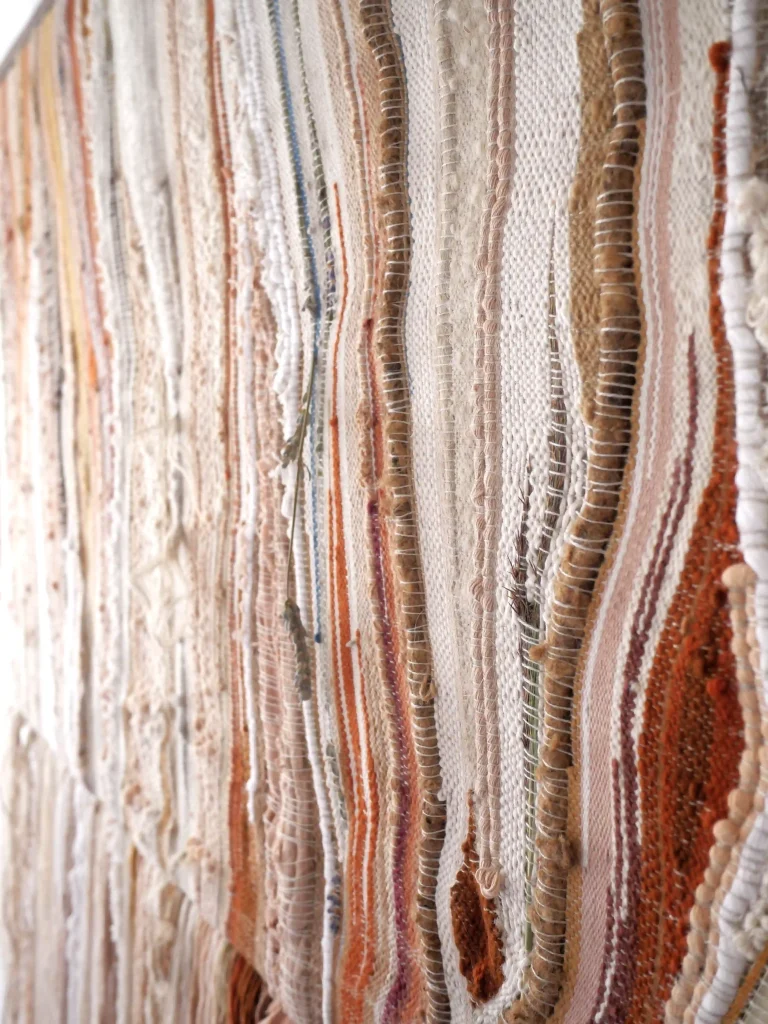
Materials may be used in different states — raw, carded, spun, plied, felted or woven — according to their properties and what they make possible within the work.
colours / dyes
Avocado · Coffee · Chestnut · Oak · Turmeric · Eucalyptus · Hemp agrimony · Oakmoss · Madder · Pomegranate · Laurel · St John’s wort · Mimosa · Walnut · Onion · Osage orange · Nettle · Sorrel · Passionflower · Indigo persicaria · Dyer’s puffball · Terebinth · Hairy polypore · Pokeweed · Rosemary
The dyes are made from plants, fungi, soils and other gathered, recycled or cultivated materials, without commercially produced mineral or metal mordants. Dye baths are used to exhaustion, and residues are composted whenever their nature allows it.
techniques
Felting · Hand spinning on a spinning wheel · Natural dyeing · Hand weaving on a rigid-heddle loom · Direct incorporation of foraged plants · Mounting on a stretcher · Framing and woodworking
frame
Walnut · Frame made from sustainably managed French wood and worked in the Gard
Pine stretcher
history of the work
What is unique to this work
process
After weaving and mounting the work on its frame, some of the threads are deliberately left unsecured at the boundary of the surface. They remain free, descend to the floor and spread across it.
This extension does not represent a continuity external to the work: it is the material continuity of the work itself. The same threads belong to the woven surface and then leave its plane to enter into space.
The frame thus retains its role as structure and boundary without being able to contain entirely what it gives form to.
exhibitions & awards
Valcellina Award — Silver Medal / 2e prix
12e édition Wake up! · Le Arti Tessili, Maniago, Italy· 2026
Oh My Laine! — Paris Design Week
Galerie Joseph, Paris · 10–13 september 2026
about this work
For any request about this artwork
Availability, exhibition, acquisition or project.