ARTWORK
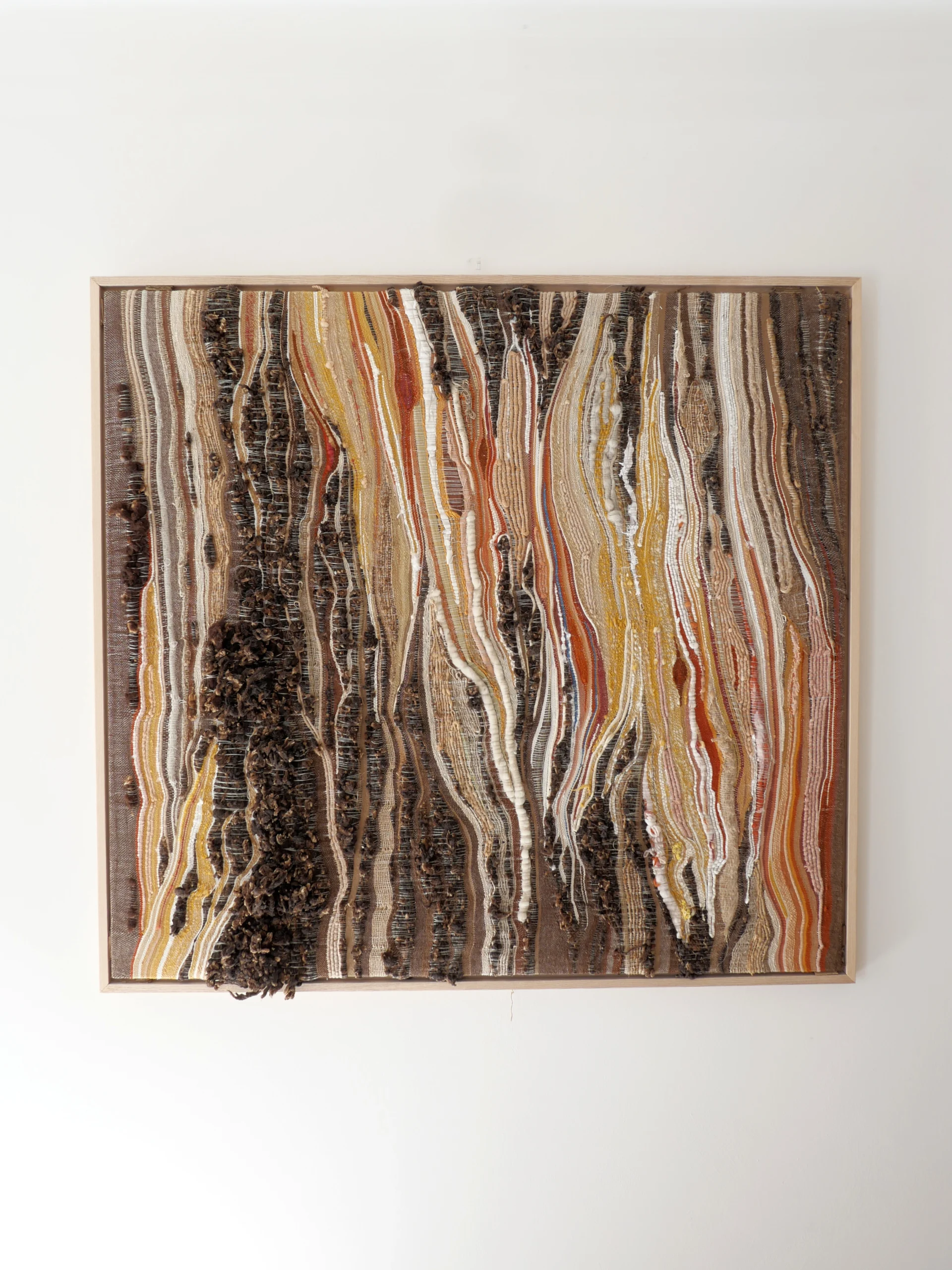
Cartographies de l’Invisible #12
2026
118 × 125 cm
Hand weaving · natural fibres · natural dyes
Unique work
about the artwork
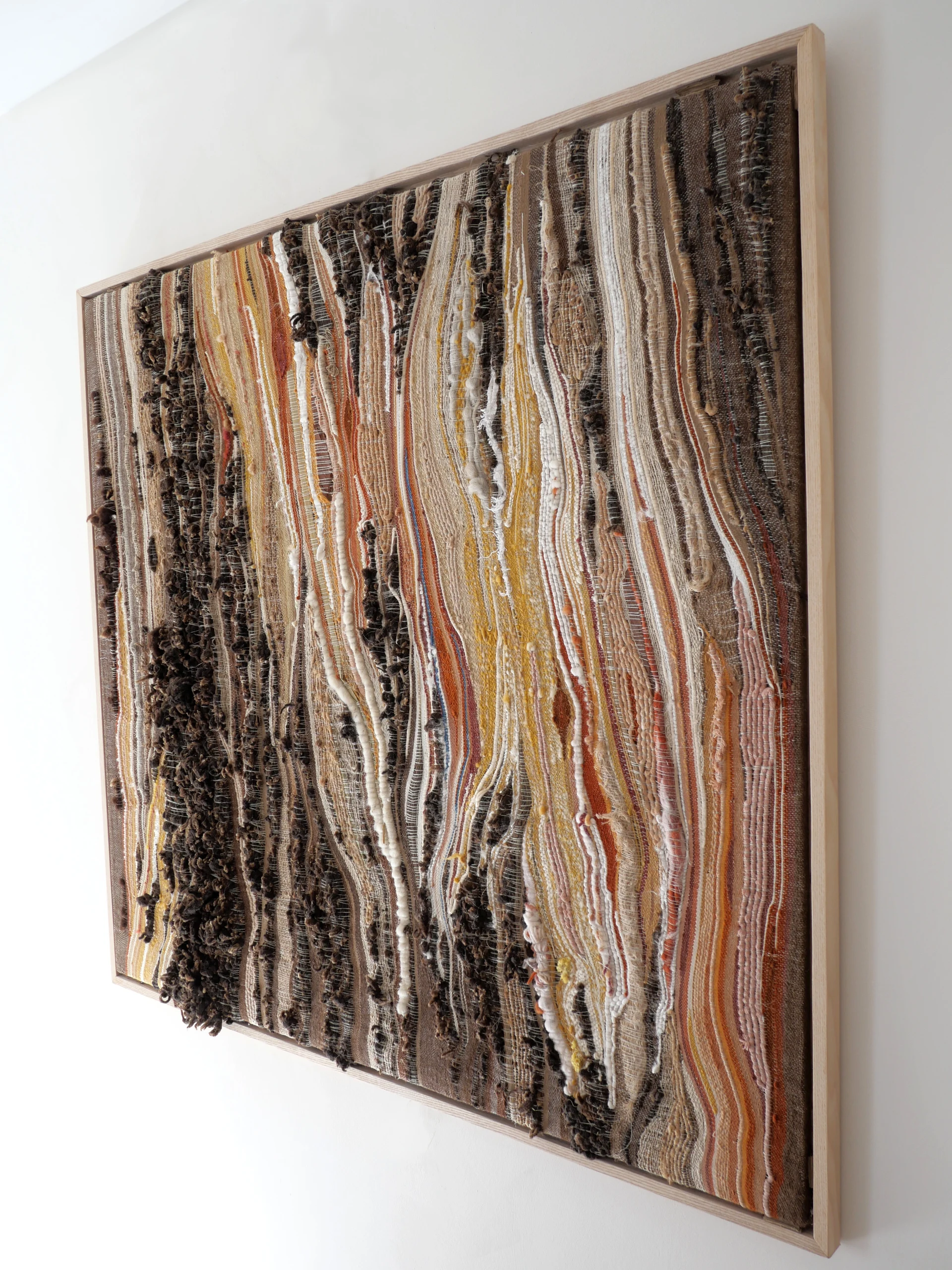
In Cartographies de l’Invisible #12, I work with the woven surface as a boundary that gives form without becoming entirely sealed.
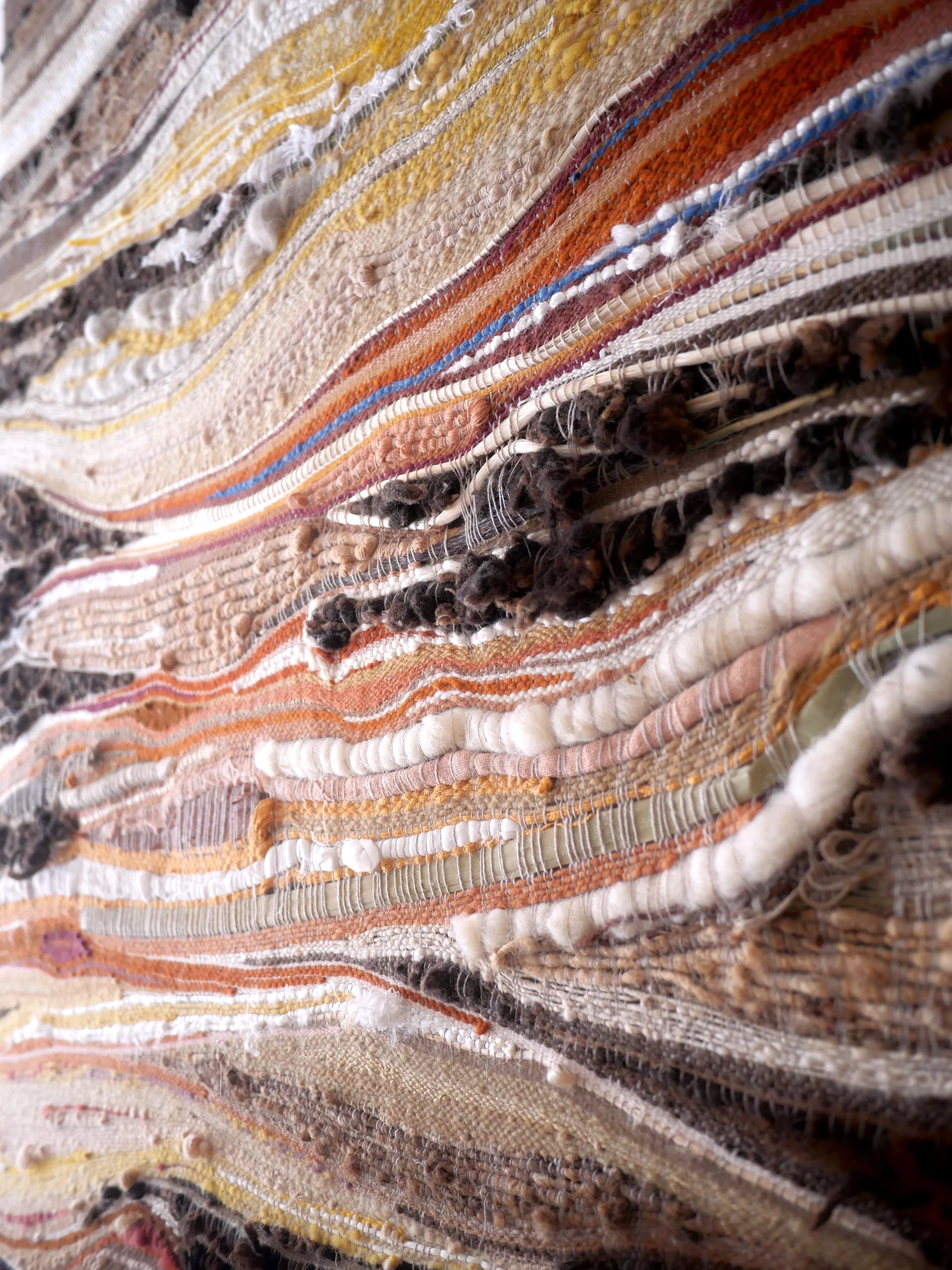
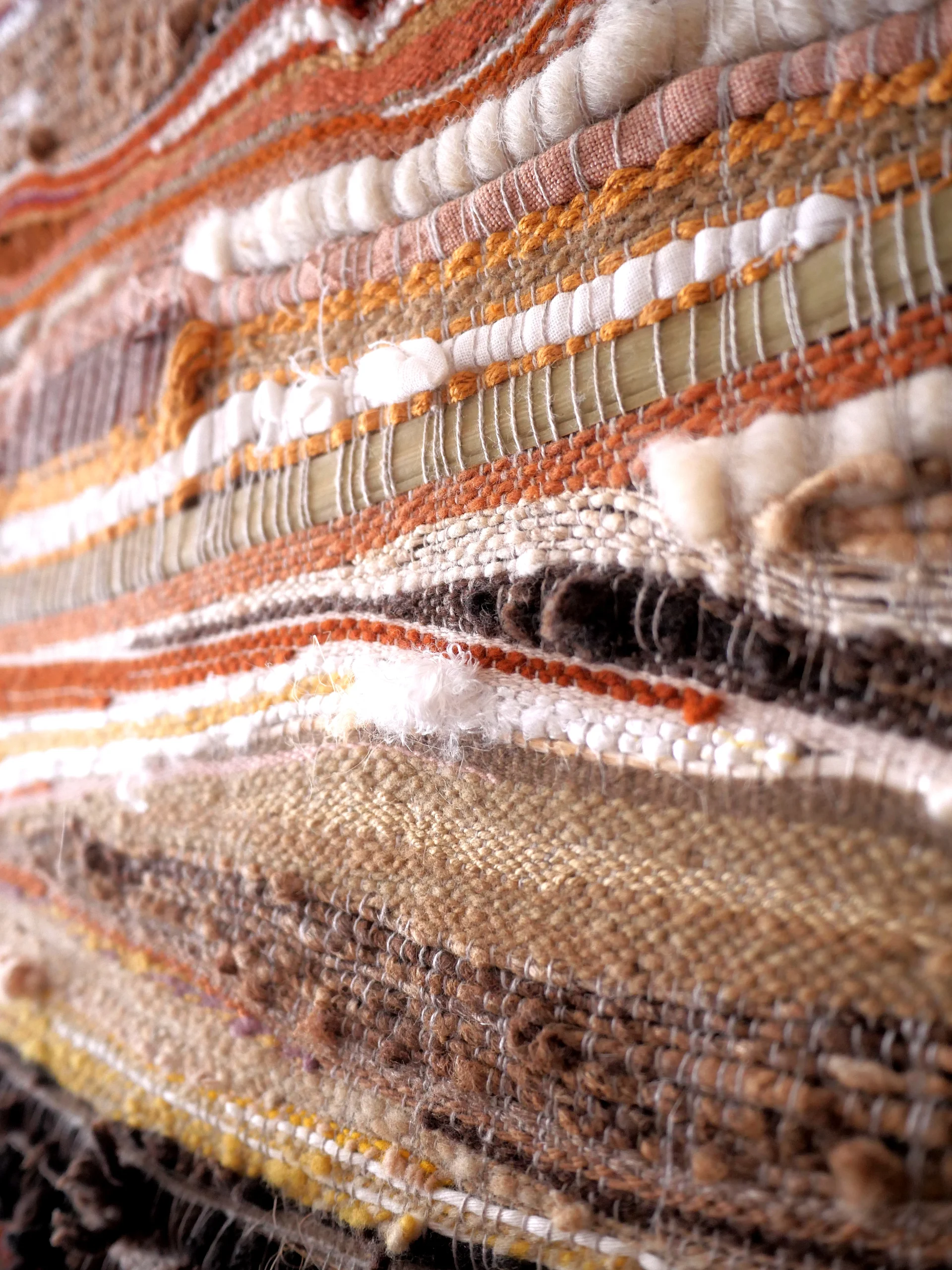
The threads, their tensions, densities and spacing construct a continuous surface, but never a homogeneous one. Materials sit alongside one another, overlap or reveal the intervals between them; light and the gaze can circulate through these spaces.
The work remains contained within the frame. Yet what constitutes it — crossings, passages, variations in density and tension — prevents the surface from functioning as a closed image.
The surface thus becomes a threshold: not towards somewhere else, but towards another way of perceiving what is already there.
MATERIALS & TECHNIQUES
what the work is made of
FIBRES
Cottons
Falé — Sine Saloum, Senegal; grown without irrigation and hand-spun · Cotton grown in Asia and spun in France by one of the country’s last remaining spinning mills, EPV-certified · Khadi — Bihar, India; grown and hand-spun in the tradition of the Khadi movement · Pakucho — Peru; native naturally coloured variety, undyed · Recycled cotton — Poland; processed without water or chemicals
Flax
Raw flax fibres · Unbleached linen yarn · Linen fabric — grown and processed in France
Other plant fibres
Raw wild hemp, gathered and hand-spun · Raw wild hemp, hand-gathered · Pineapple leaf fibres, extracted from leaves recovered after the fruit harvest and then processed and dried by hand · Hand-dried palm fibres · Pure bamboo fibre, non-viscose · Wild Himalayan nettle — gathered in Nepal and hand-spun in India
Foraged wild plants
Mimosa bark · Everlasting flower · Marsh iris · Common rush · Cattail — gathered by hand from the environments around me and incorporated directly into the weaving
Wools
Brigasque — Alpes-Maritimes · Corsican wool — Corsica · Mérinos d’Arles — Bouches-du-Rhône · Black Merino — Bouches-du-Rhône
Silks
Eri — naturally cream or copper-coloured depending on the silkworm’s diet · Hand-spun Ghicha · Recycled silk in tubes, produced during the reeling process · Recycled silk hand-spun from saris · Raw forest Tassar · Hand-spun forest Tassar
Materials may be used in different states — raw, carded, spun, plied, felted or woven — according to their properties and what they make possible within the work.
colours / dyes
Chestnut · Madder · Pomegranate · St John’s wort · Mimosa · Onion · Indigo persicaria · Plane tree · inonotus hispidus · Tea
The dyes are made from plants, fungi, soils and other gathered, recycled or cultivated materials, without commercially produced mineral or metal mordants. Dye baths are used to exhaustion, and residues are composted whenever their nature allows it.
techniques
Hand spinning on a spinning wheel · Natural dyeing · Hand weaving on a rigid-heddle loom · Direct incorporation of foraged plants into the weaving · Mounting on a stretcher · Framing and woodworking
frame
Ash · Wood from sustainably managed French forests and worked in the Gard
history of the work
What is unique to this work
process
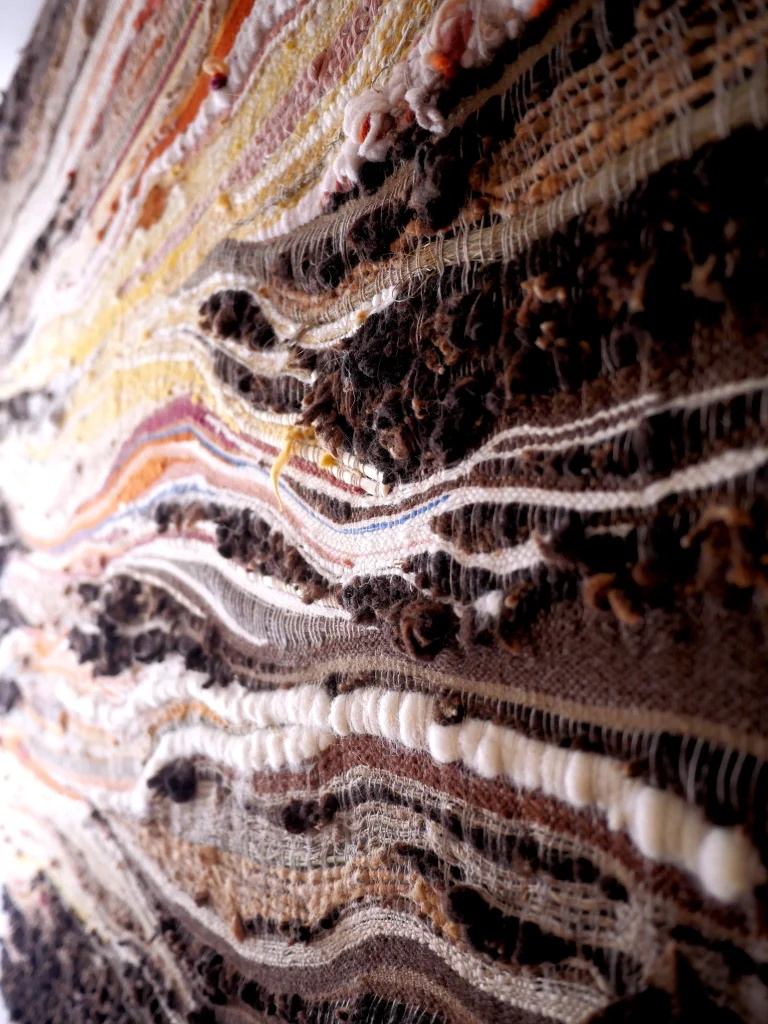
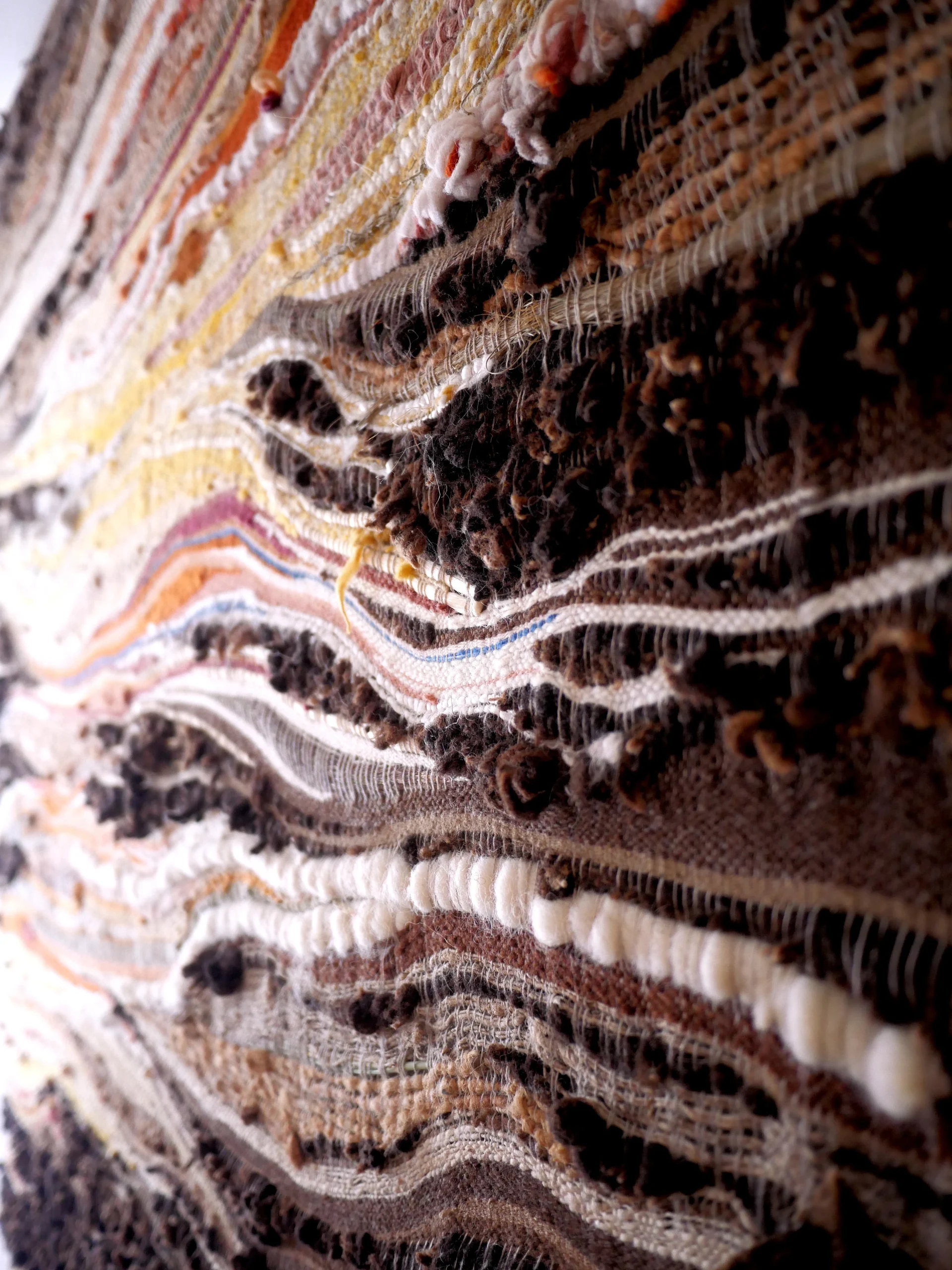
In this work, I incorporated raw black wool directly into parts of the weaving, without spinning it. Unlike the threads that construct the surface, this material retains its volume, irregularity and a certain capacity to extend beyond the structure.
As the work progressed, it began to occupy the interstices, cover certain areas and develop in relief across the textile surface. Several people spontaneously recognise in it something resembling moss, lichen or a fungus that seems to be colonising the weaving.
This resemblance was not sought as a form of representation. It interests me because it emerges from the actual behaviour of the material: a form introduced into the structure seems gradually to acquire a dynamic of its own and alter the perception of the whole.
The material seems less placed upon the surface than in the process of taking its place within it.
exhibitions & awards
about this work
For any request about this artwork
Availability, exhibition, acquisition or project.