ARTWORK
Unique work
about the artwork
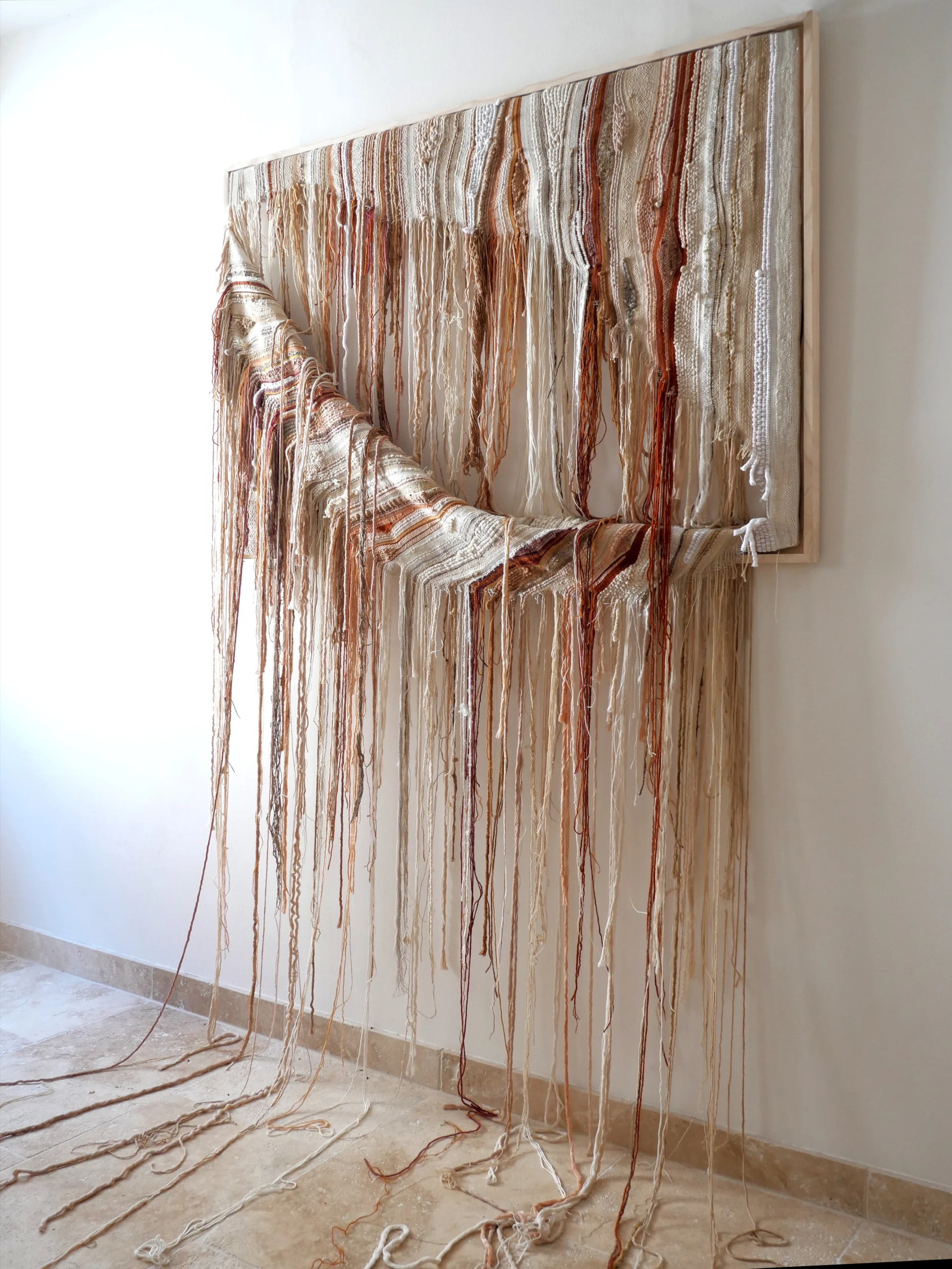
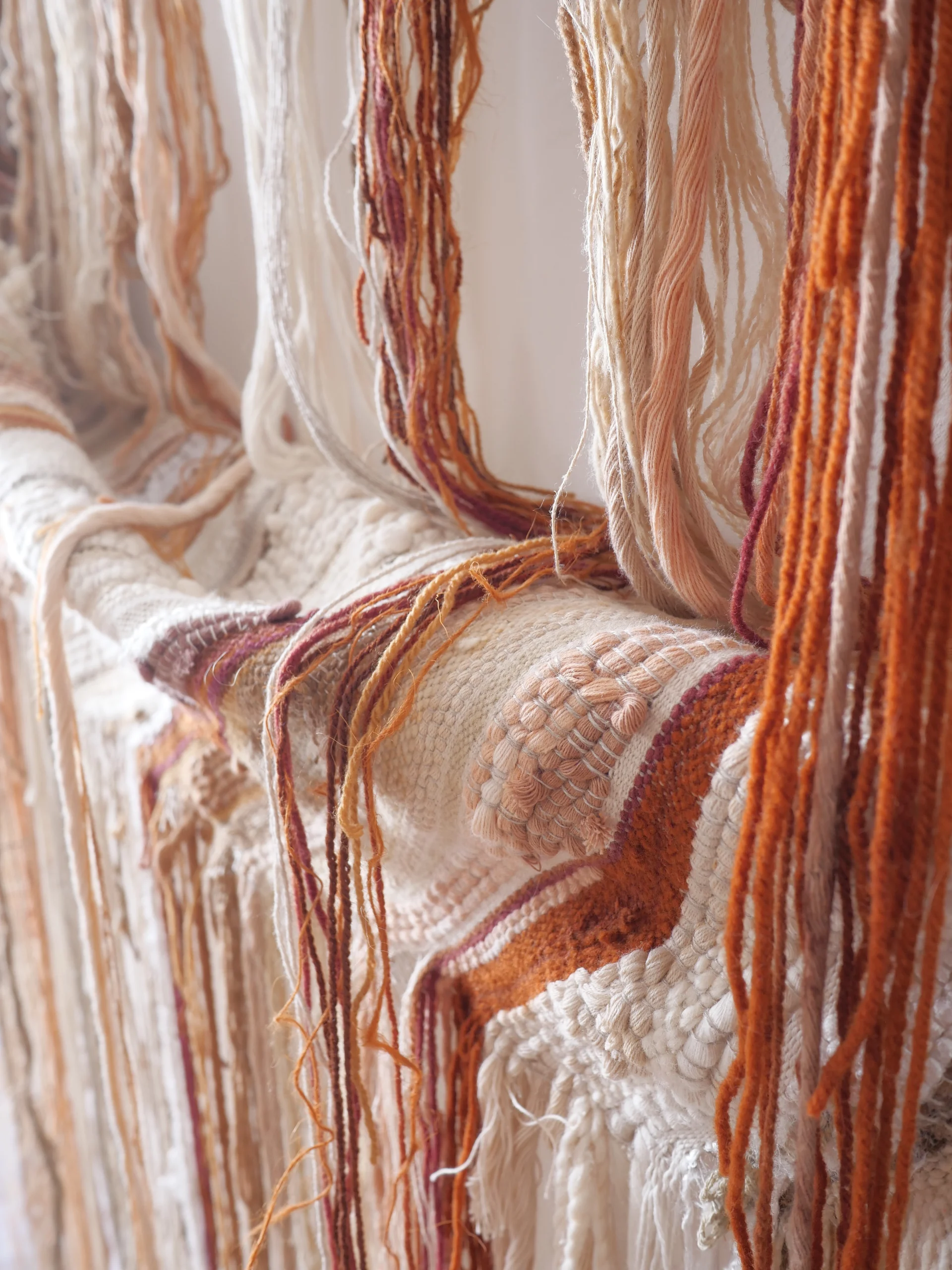
In Cartographies de l’Invisible #15, the woven surface was first constructed as a continuous whole, contained within the frame. Once the weaving was complete, I deliberately tore it.
This gesture was not intended to illustrate a rupture or give symbolic form to a pre-existing idea. It acts directly upon the material reality of the work: the surface opens, some of the threads are released, and the textile can no longer be contained entirely within the plane of the work.
From this opening, the work extends into space. The threads descend, shift and meet the floor; what was a surface also becomes a spatial presence.
The tear therefore does not destroy what was constructed through weaving. It alters the conditions of its existence. The work remains held by its structure, while allowing that structure to become open, traversable and unfinished at its boundaries.
MATERIALS & TECHNIQUES
what the work is made of
FIBRES
Cottons
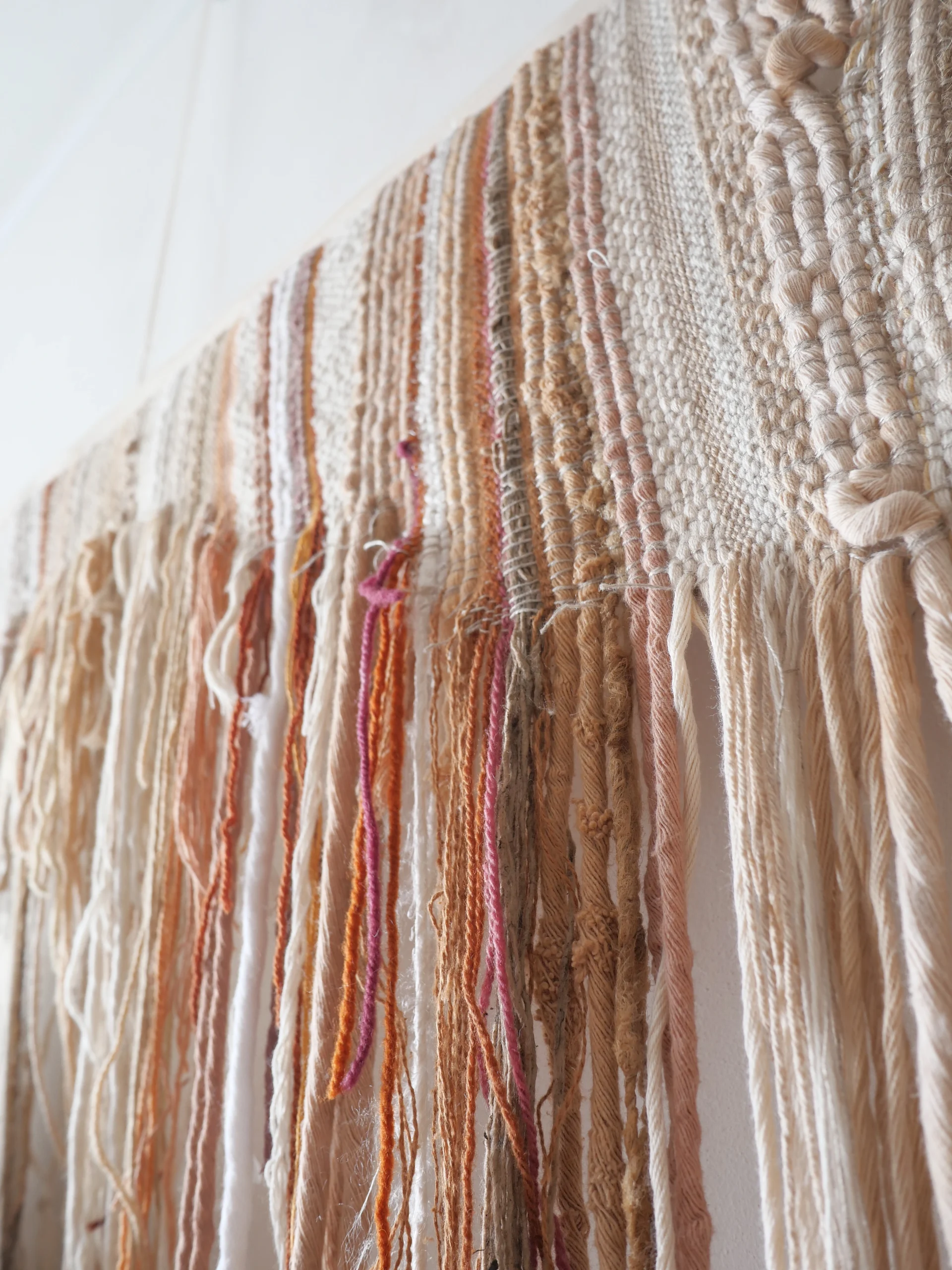
Falé — Sine Saloum, Senegal; grown without irrigation and hand-spun · Cotton spun in France by an EPV-certified mill, grown in Asia · Khadi — Bihar, India; hand-spun · Pakucho — Peru; native naturally coloured variety · Recycled cotton — Poland; processed without water or chemicals
Flax
Raw flax fibres · Unbleached linen yarn · Linen fabric — grown and processed in France
Other plant fibres
Raw wild hemp, gathered and hand-spun · Pure bamboo fibre, non-viscose
Wools
Brigasque — Alpes-Maritimes · Mérinos d’Arles — Bouches-du-Rhône
Silks
Eri, naturally cream or copper-coloured · Hand-spun Ghicha · Hand-spun forest Tassar
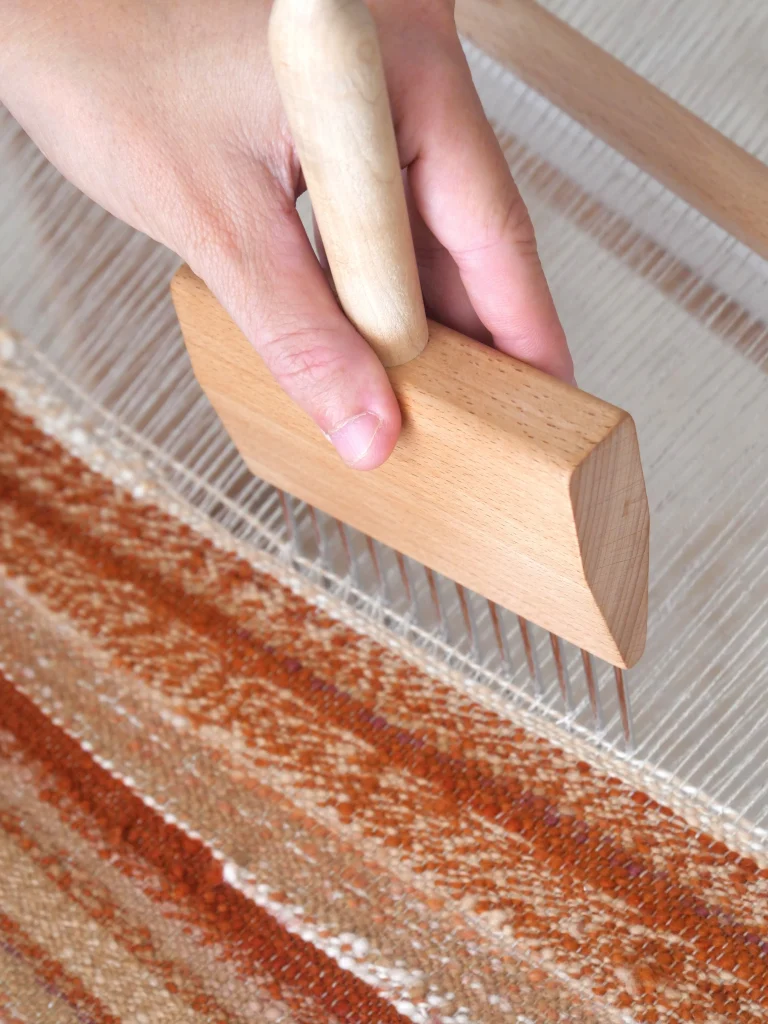
Materials may be used in different states — raw, carded, spun, plied, felted or woven — according to their properties and what they make possible within the work.
colours / dyes
The dyes are made from plants, fungi, soils and other gathered, recycled or cultivated materials, without commercially produced mineral or metal mordants. Dye baths are used to exhaustion, and residues are composted whenever their nature allows it.
techniques
frame
history of the work
What is unique to this work
process
After completing the weaving, I deliberately tore part of the work’s surface. The tear is not an image of rupture: it is a real act performed on the object. It releases the threads that had until then been contained within the woven structure and allows the work to extend beyond the frame, into space and down to the floor.
exhibitions & awards
Oh My Laine! — Paris Design Week
Galerie Joseph, Paris · 2026
about this work
For any request about this artwork
Availability, exhibition, acquisition or project.